
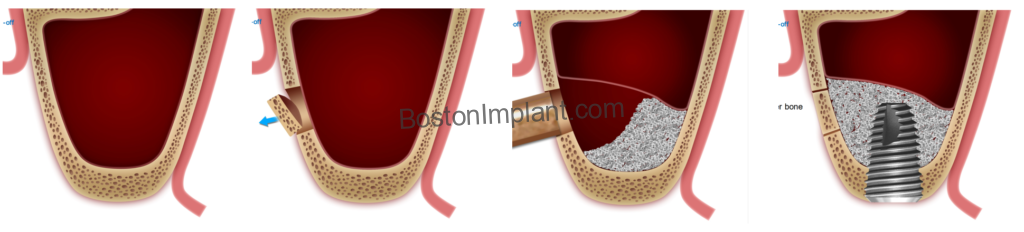
At Finesse Dentistry & Implant Center, we believe that every patient deserves a stable, long-lasting smile. For many patients seeking dental implants in the upper jaw, a Sinus Lift (Maxillary Sinus Augmentation) is the essential first step toward that goal.
What is a Sinus Lift?
A sinus lift is a specialized bone grafting procedure that increases the amount of bone in the upper jaw (posterior maxilla). By carefully “lifting” the Schneiderian membrane (the lining of your sinus) and placing bone grafting material underneath, we create the solid foundation necessary to support a dental implant.
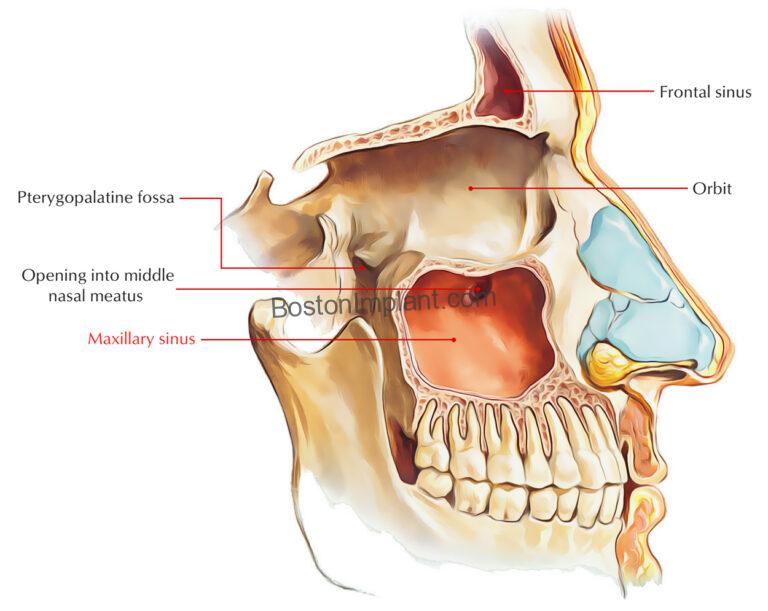
Why Do I Need a Sinus Lift?
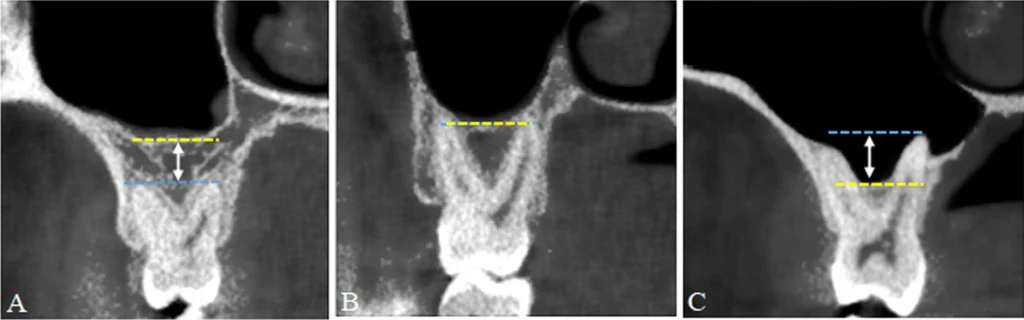
(Schematic diagram of classification of maxillary sinus pneumatization. A Type I normal pneumatization; B and C Type II extensive pneumatization. Yellow dashed line: horizontal line at the sinus floor; blue dashed line: horizontal line at the root apex; white double-headed arrow: distance between the sinus floor and the root apex. *)
When you lose teeth in the back of your upper jaw, the bone naturally begins to resorb (shrink). Simultaneously, the maxillary sinus—the air-filled cavity above your teeth—can expand downward. This process is known as Sinus Pneumatization.
Without enough bone height, a dental implant cannot be securely anchored. A sinus lift “reclaims” that space, ensuring your implant stays stable for decades.
Our Approach: Precision and Technology
At our Boston office, we utilize Cone Beam Computed Tomography (CBCT) to map your sinus anatomy in 3D before your procedure. This allows us to choose the safest and most effective approach for your specific anatomy.
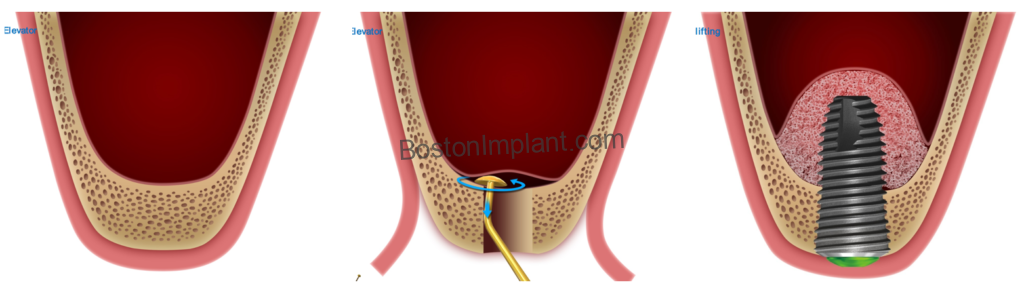
1. The Internal (Crestal) Approach
- Best For: Patients who only need a small amount of additional bone (usually 1–3mm).
- The Procedure: We access the sinus through the same small hole created for the implant.
- The Benefit: Minimally invasive, less swelling, and a faster recovery time.
2. The Lateral (External) Approach
- Best For: Patients with significant bone loss who require a larger graft.
- The Procedure: We create a small “window” in the side of the jawbone to gain direct visibility of the sinus membrane.
- The Benefit: This provides the highest level of predictability and control for complex cases, allowing for maximum bone volume creation.
Patient Success Stories: Real Results in Boston
Case Study A: Immediate Placement
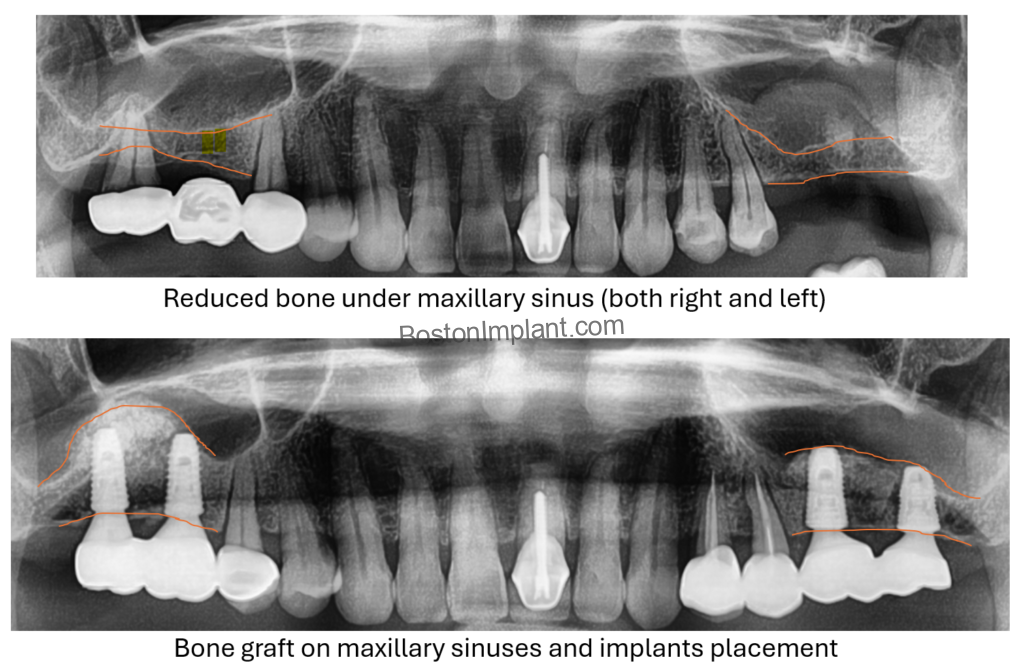
Patient: 48-year-old male with missing upper molars.
Solution: Using the lateral approach, we performed bilateral sinus lifts. Because the patient had enough “base bone” to stabilize the implants, we were able to place the implants on the same day as the graft, saving the patient months of treatment time.
Case Study B: The Staged Approach
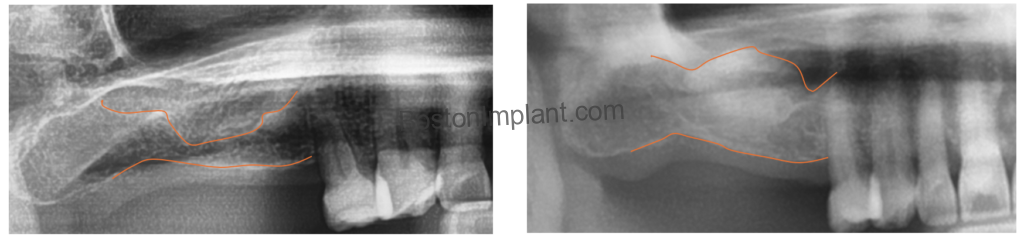
Patient: 64-year-old female with severe bone atrophy.
Solution: Due to the lack of existing bone, we performed the sinus lift first. We allowed the bone to mature and strengthen for six months before placing the implants.
Result: A perfectly integrated, functional set of new teeth that the patient can rely on for a lifetime.
What to Expect: Recovery and Aftercare
Most patients are surprised to find that a sinus lift is no more uncomfortable than a routine filling. However, following our post-operative instructions is vital for success:
- Avoid Blowing Your Nose: For at least 14 days, you should only “dab” your nose. Blowing creates pressure that can dislodge the graft.
- Sneeze with Your Mouth Open: This prevents pressure buildup in the sinus cavities.
- Medication: We will provide a prescription for antibiotics and a decongestant to keep the area clean and clear.
Frequently Asked Questions (FAQ)
Is a sinus lift painful? No. The procedure is performed under local anesthesia. You may experience some mild swelling or “stuffiness” for 3–5 days afterward, but most patients manage this easily with over-the-counter pain relievers.
How long does it take to heal? While the initial gum healing takes 7–10 days, the new bone needs 4–9 months to fully “ossify” (turn into hard bone) before it can support the full pressure of a dental implant.
What materials are used for the bone graft? We use high-quality, biocompatible materials that are scientifically proven to encourage your body to grow its own natural bone.
Schedule Your Consultation Today
Don’t let bone loss prevent you from enjoying the benefits of dental implants. At Finesse Dentistry & Implant Center, we combine surgical expertise with a compassionate, patient-first approach.
Contact us to see if a sinus lift is the right solution for your smile.
- Call/Text: 617-286-6515
- Address: 183 Essex St, Boston MA 02111
- Email: S.Lee@BostonImplant.com
* Wu, X., Cai, Q., Huang, D. et al. Cone-beam computed tomography-based analysis of maxillary sinus pneumatization extended into the alveolar process in different age groups. BMC Oral Health 22, 393 (2022). https://doi.org/10.1186/s12903-022-02445-2
Pingback: Addressing Complex Dental Needs: Implants, Sinus Lifts – BostonImplant.com
Pingback: Factors affecting the cost of the dental implant treatment – BostonImplant.com